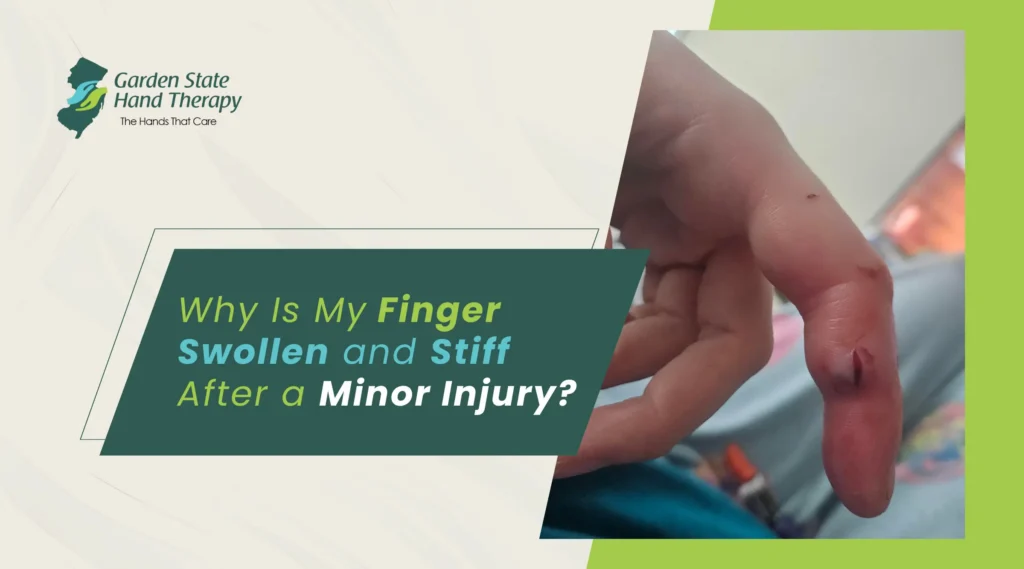
A finger injury can feel small at first. You may think it is just a jam, a bump, or a tiny bruise. But later, your finger may swell. It may also feel swollen and stiff and hard to move.
This can happen even after a minor injury. When dealing with swollen and stiff fingers, it helps to know that the finger has small bones, joints, ligaments, and tendons. These parts can get hurt more than you think.
The good news is that many finger injuries get better with the right care. But if the swelling and stiffness do not go away, your finger may need help from a hand therapy expert.
Why Your Finger May Swell: Causes of Swollen Fingers
Swelling is the body’s way of reacting to injury. It sends extra blood and fluid to the area to help it heal.
A swollen finger may happen because of:
- A sprain
- A strain
- A bruise
- A jammed joint
- A tendon injury
- A small fracture
Even if the injury seems light, the finger can still become puffy and sore. Swelling can make it hard to bend the finger. It can also make the finger feel tight.
Why Your Finger Feels Stiff
Stiffness often comes after swelling. When a finger swells, it does not move as freely. The joints and soft tissues can get tight.
Stiffness can also happen if you stop moving the finger because it hurts. This is normal. But too much rest can make the finger even stiffer, leaving you with persistently stiff fingers.
A stiff finger may:
- Feels hard to bend
- Hurt when you try to move it
- Feel weak
- Make it hard to grip things
- Feel stuck in one position
Common Minor Injuries That Cause This Problem
A small injury can still cause a lot of trouble.
Some common causes are:
- Hitting the finger on a hard object
- Catching the finger in a door
- Bending the finger the wrong way
- Falling on the hand
- Lifting or gripping too hard
- Repeating the same motion over and over
These injuries may seem simple. But they can affect how your finger works.
Signs You Should Not Ignore
Some finger injuries heal with rest. Others need more care.
Watch for these signs:
- The swelling does not go down
- The finger stays stiff
- You cannot bend or straighten it well
- The finger looks bent or crooked
- The pain gets worse
- You feel numbness or tingling
- The finger is red or very warm
If you notice these signs, it is smart to get help. Early care can protect your finger and help you heal better.
What You Can Do at Home
If the injury is mild, some simple steps may help.
- Rest the finger
- Use ice for a short duration
- Raise your hand when you can
- Remove rings if the finger swells
- Move the finger gently if it does not hurt too much
Do not push the finger too hard. Gentle care is better than forcing movement.
If the finger still does not get better, it is time to have it checked.
Why Hand Therapy Can Help
Hand therapy can make a big difference after a finger injury. It can help ease pain, lower swelling, and improve movement.
Garden State Hand Therapy gives expert rehab care for the hand, wrist, forearm, and elbow. The care is personal and based on what each patient needs.
Garden State Hand Therapy was founded by Arpita Dharia. She specializes in hand therapy and treats upper extremity injuries and conditions. She uses evidence-based care and is PAM certified. Treatment may include:
- Manual techniques
- Kinesio taping
- Patient education
- Close communication with referring doctors
- Custom orthotics and prosthetics, when needed
This kind of care can help the finger move better and feel stronger again.
Problems Garden State Hand Therapy Treats
Garden State Hand Therapy helps with many hand and arm problems, such as:
- Carpal tunnel syndrome
- Cubital tunnel syndrome
- De Quervain’s tenosynovitis
- Tennis elbow
- Golfer’s elbow
- Radial tunnel syndrome
- Shoulder impingement
- Thumb CMC arthritis
- Other arthritis problems
- Tendinitis and tendonitis
- Trigger fingers
- Sprains and strains
- Wrist, hand, forearm, and elbow fractures
- Tendon injuries
- Nerve injuries
If your finger swelling is part of a larger hand problem, therapy can help find the cause and treat it the right way.
How Therapy Supports Healing
When a finger is hurt, the goal is not only to relieve pain. The goal is also to help the finger move well again.
Hand therapy may help with:
- Swelling control
- Pain relief
- Better motion
- Better grip
- Safe healing
- Less stiffness
A therapist can also teach you how to protect the finger while it heals. This can make daily tasks easier and safer.
Why You Should Not Wait Too Long
A swollen finger may seem small. But if it stays stiff for too long, it can become harder to treat.
Waiting too long may lead to:
- More stiffness
- Less movement
- Weak grip
- Ongoing pain
- Trouble doing daily tasks
That is why early help matters. The sooner you care for the finger, the better chance it has to heal well.
When to Get Help
You should get checked if:
- The swelling persists for longer than a few days
- The finger still hurts a lot
- You cannot use your hand well
- The finger does not move as it used to
- You think there may be a fracture
- The pain keeps coming back
A hand therapy expert can look at your injury and guide you to the next step.
Final Thoughts
A finger that is swollen and stiff after a minor injury should not be ignored. Small injuries can still cause pain and make it hard to move your hand. Rest and home care may help at first. But if the finger stays sore, stiff, or swollen, you may need more support.
Garden State Hand Therapy offers expert rehab care to help you heal and regain hand strength and function. With personal care, patient teaching, and close doctor communication, you can get the help your finger needs to recover well.
FAQs
Why is my finger swollen after a small injury?
Your body may be sending fluid to the hurt area. This can cause finger swelling and pain.
Why does my finger feel stiff?
Stiffness can happen when the finger is swollen or not moving much.