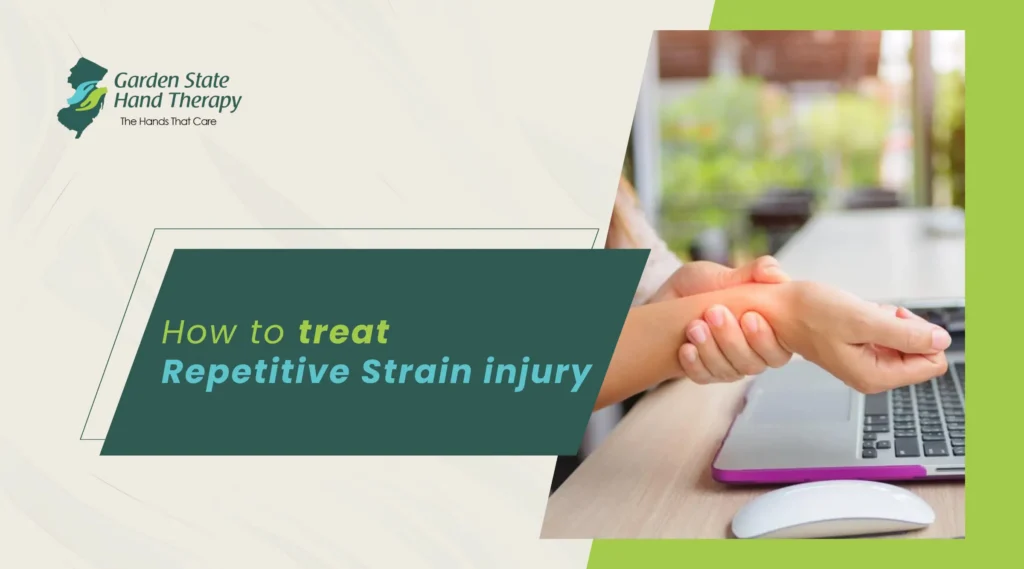
Simple day-to-day things can be difficult to do when you have a repetitive strain injury. You may feel discomfort. This can happen when you type, lift, grip, twist, or rest your hand and arm. This pain starts mildly. Then, it worsens with repeated movement.
Garden State Hand Therapy specializes in treating pain in the hand, wrist, elbow, and arm. We focus on each person’s unique needs in their care. We help with issues like carpal tunnel syndrome. We assist with tendon pain, trigger finger, sprains, strains, and nerve injuries, too. We aim to make you feel better, move better, and use your hands more easily.
What Is Repetitive Strain Injury?
Repetitive strain injury is caused by muscle overuse and repetitive strains of a body part in the same way. It commonly involves the thumb, hand, wrist, forearm, elbow, or shoulder. It can occur at work, during sports, or when using tools or phones.
Common signs of RSI are:
- Pain or soreness
- Swelling
- Weak grip
- Stiffness
- Tingling or numbness
- Trouble holding things
- Increased pain when moving
Early recognition of these symptoms can lead to more effective and rapid treatment.
First Steps to Treat Repetitive Strain Injury (RSI)
Rest the sore area first. This doesn’t mean no activity during the day. It refers to painful stops in movement or fewer movements overall.
You can try these simple steps:
- Rest the area for a short time.
- Use ice for 15 to 20 minutes at a time to help with pain and swelling.
- Avoid heavy use of the sore hand, wrist, or arm.
- Keep the area supported if it feels weak.
- Watch your pain and notice what makes it better or worse.
If the pain does not improve, it is a good idea to get help from a hand therapy expert.
Why Hand Therapy Helps
Professional RSI therapy is very helpful for repetitive strain injury because it treats the part that hurts in a safe and careful way. We look at how you move, what causes pain, and your daily needs at Garden State Hand Therapy. Then we build a plan just for you.
Hand therapy may help with:
- Carpal tunnel syndrome
- Cubital tunnel syndrome
- De-Quervain’s tenosynovitis
- Tennis elbow
- Golfer’s elbow
- Radial tunnel syndrome
- Shoulder impingement
- Thumb arthritis
- Tendinitis
- Trigger finger
- Sprains and strains
- Tendon injuries
- Nerve injuries
These problems can happen from repeated use, so the treatment should match the cause.
Common Treatments That May Help
Treatment can be different for each person. Some people need short-term rest. Others need exercises, support, or hands-on care. At Garden State Hand Therapy, we use evidence-based care and personal treatment plans.
Some common treatment methods include:
- Manual therapy
Gentle hands-on treatment can help reduce stiffness and improve movement. - Custom orthotics and splints
These can support the hand, wrist, or thumb and help reduce strain. - Kinesio-taping
This may help support muscles and joints while still allowing movement. - Exercise therapy
Special exercises can help rebuild strength and improve motion. - Patient education
Learning how to move safely can help stop the pain from coming back. - Activity changes
Minor adjustments at work or home can lead to significant improvements.
What You Can Do at Home
There are also helpful things you can do at home to support healing.
- Take breaks during repeated tasks
- Change your hand position often
- Avoid gripping too hard
- Keep your wrist in a neutral position
- Use both hands when possible
- Stretch gently if your therapist says it is safe
- Do your exercises as directed
These small steps can lower stress on the sore area.
When to Get Help
You should get help if:
- Pain lasts more than a few days
- The pain keeps coming back
- You feel numbness or tingling
- Your grip is getting weaker
- It hurts to open jars, type, or lift items
- Your hand or arm feels stiff all the time
Getting care early may help keep a small problem from becoming a bigger one.
How We Support Recovery
At Garden State Hand Therapy, we understand that pain in the hand or arm can affect work, school and home life. That is why we focus on care that is personal and practical. We do not just treat the pain. We also look at the way you use your hands every day.
Our care may help you:
- Move with less pain
- Build strength again
- Improve hand use
- Heal after injury
- Return to daily tasks more safely
We also work with people who have fractures, sprains, chronic pulled muscles, tendon problems and nerve injuries. For many people, these issues can look and feel like repetitive strain injury. Care should be specific and focused.
How to Avoid Repetitive Strain Injury
After the pain starts to improve, prevention becomes very important. A few simple habits can help protect your hands and arms.
- Take short breaks during repeated work
- Do not hold the same position too long
- Use good posture
- Keep tools and work items easy to reach
- Warm up before sports or heavy use
- Follow your therapy plan
- Stop early if pain returns
Prevention is not hard, but it does take attention each day.
Final Thoughts
Repetitive strain injury (RSI) can cause a delay in your performance and is treatable. Rest, support, and the right hand therapy are vital for effective care. Garden State Hand Therapy helps those with pain in the hand, wrist, elbow, and upper limb. Personal care and custom support help you cure RSI symptoms and heal. Hands-on treatment and education let you return to life.
Early help can really help if pain lasts or if daily life gets tougher.
FAQs
What are common signs?
Pain, swelling, stiffness, tingling, and weak grip are common signs.
Can rest help?
Yes. Rest can help the sore area feel better.