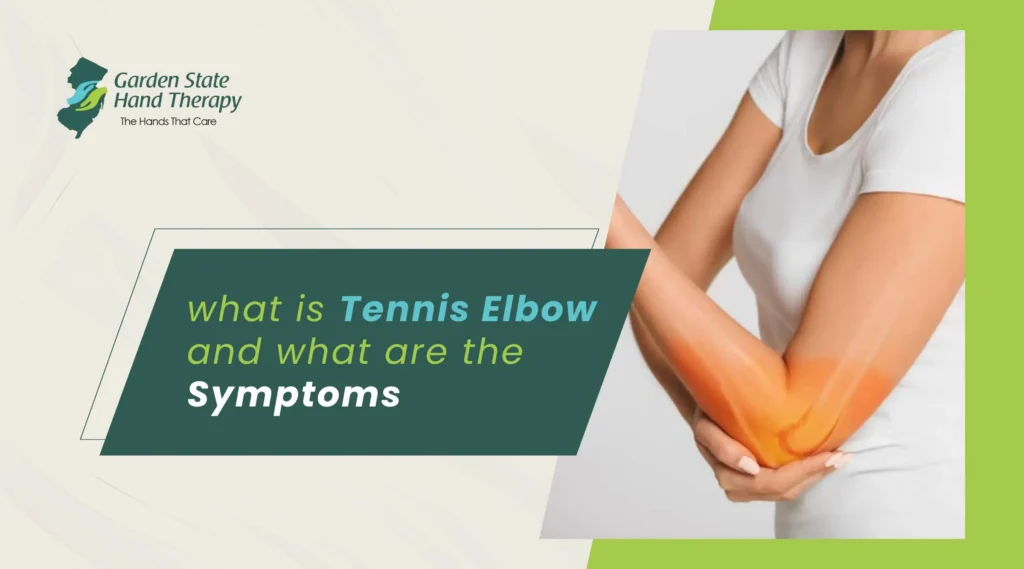
Tennis elbow is a common condition that can affect the outer elbow. Anyone can be affected, not just tennis players. The condition usually results from overuse of the forearm, wrist, or hand from common activities outside of work.
At Garden State Hand Therapy, we help people understand and treat this condition. We use simple, gentle methods to reduce pain and restore movement. We aim to provide every patient with a pain-free life and the ability to be active.
Now, let’s look at what tennis elbow is and its symptoms.
What Is Tennis Elbow?
Tennis elbow, or lateral epicondylitis, happens when forearm tendons get overloaded. They develop small tears at the outer elbow where they attach.
These tendons are responsible for movements such as:
- Gripping objects
- Lifting items
- Extending the wrist
When overused, they become inflamed and cause pain, leading to reduced strength.
Common Causes of Tennis Elbow
Tennis elbow is mainly caused by repetitive stress on the muscles and tendons in your forearm. This stress causes damage over time.
Common causes include:
- Repetitive typing or computer mouse use
- Lifting heavy objects frequently
- Using hand tools or equipment
- Painting or decorating work
- Gardening and household chores
- Sports activities like tennis or golf
- Repeated gripping or twisting motions
Even a single forceful movement or minor elbow strain injury can trigger symptoms if the tendons are already weakened.
At Garden State Hand Therapy, we carefully examine your daily habits to identify the exact cause of your pain.
What Are the Symptoms of Elbow Tendonitis?
The signs of tennis elbow typically appear slowly. Early pain begins gently but intensifies over time if left untreated.
Common symptoms include:
- Pain on the outside of the elbow
- Weak grip strength
- Burning or aching sensation in the elbow
- Inability to pick up or grasp items
- Discomfort while turning a doorknob
- Problems picking up items like cups or bags
- Pain that often radiates from the elbow to the forearm
Many people also experience pain on side of elbow when shaking hands or performing simple daily tasks.
What Does Elbow Tendonitis Feel Like?
Several patients express the pain as dull, fiery, or acute. It often begins near the outer elbow and extends down the forearm.
Some feel pain only during activity, while others have aching even at rest. Gripping objects can become hard. Tasks that may suddenly hurt include:
- Opening jars
- Carrying groceries
- Lifting a child
This condition may also disrupt sleep if the arm is bent for too long.
Who Is at Risk of Tendonitis in the Elbow?
Anyone can get tennis elbow, but it is more common in:
- Office workers
- Athletes
- Builders and workers using tools
- Chefs and hair stylists
- Gardeners and mechanics
- People aged 30 to 50
Jobs or activities with repeated arm use increase the risk.
Diagnosis of Tennis Elbow
A diagnosis is typically made via physical examination. A therapist may:
- Review your symptoms and daily activities
- Identify the exact location of pain
- Test grip strength
- Assess wrist and elbow movement
In some cases, an X-ray of tennis elbow may be used to rule out other conditions, although it is not always required.
Tennis Elbow Treatment at Garden State Hand Therapy
At Garden State Hand Therapy, we help people with tennis elbow feel better. Tennis elbow can cause pain in your arm and make it hard to do daily work. Our goal is to help you move without pain.
We provide care that is simple, personal and focused on your needs.
Our treatment for tennis elbow includes:
- Manual therapy to reduce stiffness and pain
- Custom exercises to build strength and movement
- Bracing to support healing and reduce strain
- A personalized recovery plan based on your condition
We do not use the same plan for everyone. Each person gets help based on their pain and needs.
Our therapists help you step by step. We explain everything so you understand how you are improving and feel supported as you heal.
Why Early Treatment Is Important
Getting help early is very important. It can:
- Reduce pain faster
- Improve arm strength sooner
- Prevent long-term damage
- Help you return to normal activities quickly
At our clinic, we always encourage early care to improve recovery outcomes.
Simple Tips to Prevent Tennis Elbow
You can help protect your arm by:
- Taking breaks during work
- Stretching your arms
- Using good posture
- Not lifting heavy things the wrong way
- Doing light exercises for strength
Conclusion
Living with elbow pain can make simple tasks frustrating and uncomfortable. The good news is that effective treatment options are available.
At Garden State Hand Therapy, we focus on helping patients regain comfort, strength, and movement through personalized care and proven therapy methods.
If you are experiencing tennis elbow pain, discomfort during gripping, or ongoing elbow weakness, our team is ready to help.
Contact Garden State Hand Therapy today to schedule an evaluation and begin your path toward recovery and better arm health.
FAQs
Why do elbow tendons hurt?
They hurt when used too much and can cause small tears. This causes pain and swelling.
Does an X-ray show tennis elbow?
No. An X-ray of tennis elbow usually does not show it, but it can find other bone issues.
When should I see a doctor for elbow pain?
You should see a doctor if you have elbow pain:
- Lasts more than a few weeks
- Becomes severe
- Causes weakness
- Interferes with normal activities